Marriage & Couples Counselling in Alberta — Finding Your Way Back to Each Other
Every relationship goes through difficult seasons.
Sometimes couples are struggling with constant arguments or communication problems. Other times, the relationship may feel more distant, and you can’t quite remember when things started to change. You may be dealing with trust issues, parenting disagreements, intimacy concerns, financial stress, or simply feeling disconnected from one another.
And sometimes, nothing is dramatically wrong—you just want your relationship to be stronger.
At Family Life Psychology & Wellness, we provide compassionate marriage and couples counselling for couples in Spruce Grove, Edmonton, Fort McMurray, and surrounding Alberta communities.
Our registered psychologists provide a safe, non-judgmental space where both partners can feel heard and understood. Together, we’ll work to better understand the patterns affecting your relationship and develop healthier ways of communicating, connecting, and moving forward.
You don’t have to wait until your relationship is in crisis to seek support.
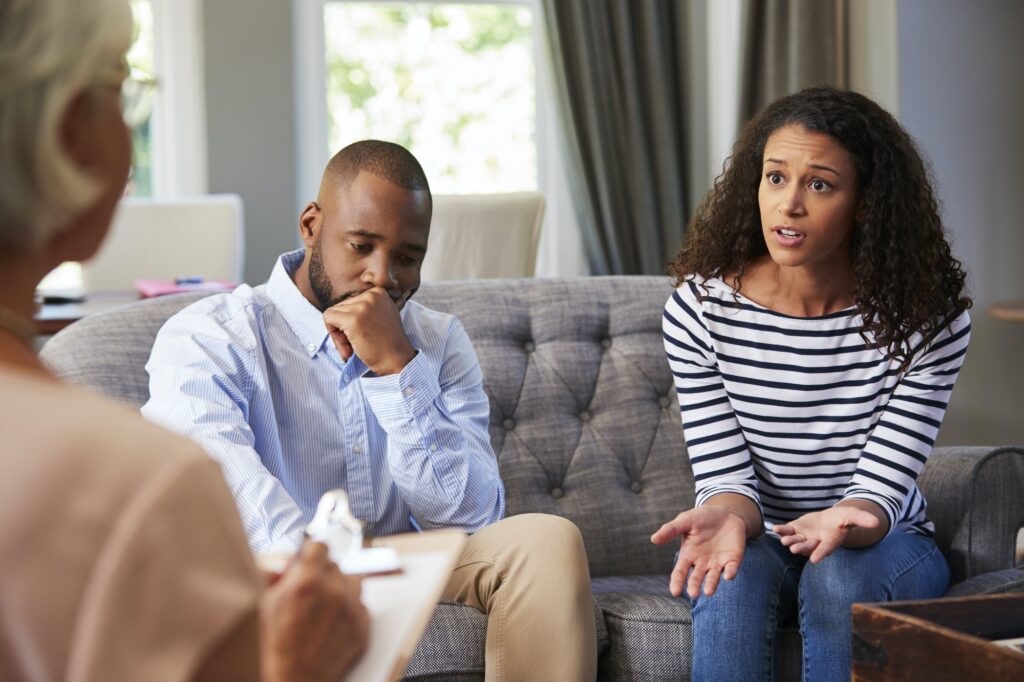
What Is Marriage & Couples Counselling?
Marriage and couples counselling is a form of therapy designed to help partners better understand their relationship, improve communication, work through conflict, and strengthen their connection.
Couples therapy isn’t about deciding who is right or wrong.
Instead, counselling helps you step outside of the cycle you may find yourselves stuck in and understand what’s happening underneath the conflict.
Your psychologist can help you explore:
- How you communicate with each other
- Patterns of conflict
- Emotional needs
- Trust and connection
- Expectations within the relationship
- How past experiences affect the relationship
- Parenting and family responsibilities
- Intimacy and affection
- Major life changes
- Individual mental health concerns affecting the relationship
The goal is to help both partners better understand themselves, each other, and the relationship as a whole.
When Should a Couple Consider Counselling?
There’s no single “right” time to begin couples therapy.
Some couples seek counselling after a major conflict or crisis. Others come because they’ve noticed smaller problems gradually becoming bigger ones.
You may benefit from couples counselling if you’re experiencing:
- Frequent arguments
- Communication breakdowns
- Emotional distance
- Difficulty resolving disagreements
- Trust concerns
- Infidelity or relationship betrayal
- Intimacy or affection concerns
- Parenting disagreements
- Financial conflict
- Different expectations about the relationship
- Stress related to work or family responsibilities
- Major life transitions
- Feeling more like roommates than partners
- Difficulty reconnecting after having children
- Repeated arguments about the same issues
You don’t need to have a “bad enough” relationship to benefit from therapy.
Many healthy couples use counselling proactively to strengthen communication and prepare for major transitions.
You Don’t Have to Be in Crisis to Benefit
One of the most common misconceptions about couples counselling is that you should only seek help when your relationship is falling apart.
In reality, the earlier you address relationship concerns, the more opportunity you may have to change unhelpful patterns before they become deeply established.
You might come to counselling because:
“We love each other, but we don’t know how to stop fighting.”
Or:
“We’re doing okay, but we’ve become disconnected.”
Or simply:
“We want to make our marriage stronger.”
All of these are valid reasons to seek support.
Couples counselling isn’t a sign that your relationship has failed. For many couples, it’s an investment in the relationship they want to build together.
5 Ways to Encourage Your Partner to Attend Counseling
Yes, counselling for relationships is helpful and beneficial. However, there is no “trick” for getting your partner to join you in couples counselling or marriage therapy. While the following tips may help you to encourage your partner, they are not forms of manipulation.
If your partner feels hesitant about seeking couples counselling, here are a few guidelines to follow in encouraging your spouse:
- Show signs of change yourself. Oftentimes, when someone avoids couples counselling, it’s because they don’t think it will be effective in facilitating real change in their partner or relationship. Counter this worry by helping your partner to see that you’re not only willing to change, but also that you have already begun improving yourself. Going to counselling on your own is a good way to show that you are serious about committing to a self-improvement process.
- Stress that you and your partner are in this together. Remind your partner that, while your relationship has difficulties, you want to work with him or her to improve the relationship together. Show solidarity and an openness to doing whatever is necessary for a healthy, happy partnership.
- Explain to your partner that the counsellor is a neutral party. If you have spoken with a couples counsellor by telephone or perhaps even met with a counsellor in-person, make sure that you stress their neutrality to your partner—explain that the counsellor is by no means “on your side,” but will work with both of you impartially. Alternatively, offer to see a new couples counsellor that neither of you has had contact with.
- Prompt them to consider the rewards of couples counselling. If you suggest couples counselling, your partner may have some resistance because it was “your idea.” Help to make couples counselling a shared idea by asking your partner, “Hypothetically, if we were to go to couples counselling, what would you most want to get out of our sessions?” This question may also help your partner to begin thinking about his or her potential gains from couples counselling.
- Talk about “even if.” Your partner may say that he or she doesn’t want to go to counselling because there is no hope for the relationship. You can respond to this argument by using “even if.” The idea here is that “even if” the relationship has “no hope,” counselling can still help the two of you to part on good terms and may help each of you to learn from the experience so that you don’t make similar mistakes in future relationships.
Is It Too Late for Couples Counselling?
If you’re wondering whether you’ve waited too long, you’re not alone.
Couples often reach out after months or even years of struggling. You may feel like you’ve already tried everything, or that too much has happened to repair the relationship.
It’s not necessarily too late.
While counselling can’t change the past, it can help you understand what has happened, identify patterns that are keeping you stuck, and decide what you want the future of your relationship to look like.
Whether you’re hoping to rebuild your relationship, improve communication, recover from a difficult experience, or simply gain clarity about what comes next, counselling can provide a structured and supportive place to begin.
What We Work on in Couples Counselling
Every relationship is different, so your sessions will be tailored to your specific concerns.
Communication and conflict
Many couples don’t actually have a problem with communication—they have a problem with the pattern their communication has fallen into.
One partner may pursue a conversation while the other withdraws. One may become defensive while the other feels increasingly unheard.
Counselling can help you recognize these patterns and develop healthier ways of expressing needs, listening, and resolving disagreements.
Trust and betrayal
Trust can be deeply affected by experiences such as infidelity, dishonesty, broken promises, or other forms of betrayal.
Rebuilding trust takes time and requires more than simply deciding to “move on.”
Counselling can provide a structured environment to explore what happened, understand its impact, establish boundaries, and determine what rebuilding trust could look like.
Emotional connection
Sometimes couples aren’t fighting—they’re simply disconnected.
You may find yourselves spending very little meaningful time together, having fewer conversations, or feeling emotionally distant.
Counselling can help you understand what’s contributing to that distance and find ways to reconnect.
Intimacy and affection
Changes in physical or emotional intimacy can be difficult to talk about.
Differences in desire, affection, expectations, or comfort can create frustration and hurt when couples don’t know how to discuss them.
A psychologist can provide a respectful environment to explore these concerns without shame or judgment.
Parenting and family stress
Having children can bring enormous changes to a relationship.
Couples may disagree about:
- Parenting styles
- Discipline
- Household responsibilities
- Division of labour
- Family boundaries
- Screen time and routines
- How to manage challenging behaviour
Counselling can help partners move from feeling like they’re on opposite teams to working together toward shared goals.
Major life transitions
Relationships can be affected by significant changes such as:
- Getting married
- Having a baby
- Children leaving home
- Career changes
- Relocation
- Retirement
- Financial changes
- Illness or loss
- Blended family transitions
Even positive changes can create stress. Counselling can help couples navigate these transitions together.
How Couples Counselling Works
Your first session is an opportunity for your psychologist to understand your relationship, what brought you to counselling, and what each of you hopes to accomplish.
You may discuss:
- Your relationship history
- Current concerns
- Communication patterns
- Previous attempts to resolve problems
- Individual and shared goals
- Strengths within your relationship
From there, your psychologist will work with you to develop a treatment approach that fits your relationship.
Sessions may involve learning communication strategies, exploring relationship patterns, practicing new ways of responding to one another, and working through specific concerns.
The goal isn’t simply to talk about your problems.
It’s to help you understand what’s happening and develop skills you can continue using outside the counselling room.
A Safe Space for Both Partners
It can be intimidating to start couples counselling because you may worry that your partner will be blamed—or that the psychologist will “take sides.”
Our approach is different.
Your psychologist’s role is not to determine which partner is right.
Instead, we’ll work to understand both perspectives and create a space where each person can speak openly and respectfully.
You may not always agree with your partner’s perspective, but counselling can help you understand where they’re coming from and communicate your own experience more effectively.
Both partners deserve to feel heard.
When Individual Concerns Affect the Relationship
Sometimes relationship difficulties are connected to challenges one or both partners are experiencing individually.
For example:
- Anxiety
- Depression
- Trauma
- Stress or burnout
- Grief
- Anger or emotional regulation difficulties
- ADHD
- Major life transitions
These concerns can influence communication, intimacy, patience, and emotional availability within a relationship.
When appropriate, your psychologist may recommend individual counselling alongside couples therapy to provide more comprehensive support.
If depression is affecting your relationship, you may also benefit from our Depression Counselling services.
Christian Marriage Counselling
For couples who would like their Christian faith incorporated into counselling, we also offer Christian Counselling.
Faith can be an important part of how couples understand marriage, commitment, forgiveness, family, and personal values.
Christian couples counselling allows these beliefs to be incorporated into therapy while maintaining an evidence-informed and professionally grounded approach.
Faith integration is always guided by the couple and is never assumed.
Marriage & Couples Counselling in Spruce Grove, Edmonton, and Fort McMurray
Family Life Psychology & Wellness provides couples counselling for partners throughout Alberta.
We support couples in:
- Spruce Grove
- Edmonton
- Fort McMurray
- Surrounding Alberta communities
Depending on your needs and location, counselling may be available in person or through secure virtual appointments.
Whether you’ve been together for a few years or several decades, relationship challenges can arise at any stage.
You don’t have to wait until things become overwhelming before reaching out.