In-Person Psychological Assessments in Fort McMurray
When questions arise about learning, attention, behaviour, emotional well-being, or everyday functioning, finding clear answers can make a meaningful difference. Understanding an individual’s strengths and challenges can help families and individuals make informed decisions about appropriate support.
At Family Life Psychology & Wellness, we offer professional psychological assessments in Fort McMurray for individuals and families seeking a better understanding of cognitive, developmental, academic, emotional, or behavioural concerns.
Psychological assessments involve gathering and evaluating information to better understand how a person thinks, learns, processes information, and functions in different areas of life. Depending on the concerns being explored, an assessment may help clarify underlying difficulties, identify strengths, and provide recommendations for future support.
Whether you’re a parent looking for answers about your child’s development, a student experiencing learning challenges, or an adult seeking greater clarity about your own experiences, our team can help you explore appropriate assessment options.
We aim to provide a welcoming, professional environment where clients feel supported, informed, and comfortable asking questions throughout the process.

When Might a Psychological Assessment Be Helpful?
People pursue psychological assessments for many reasons. Sometimes concerns have been present for years, while other times challenges become more noticeable as school, work, or everyday responsibilities change.
An assessment may be helpful when someone is experiencing:
- Difficulty maintaining attention or concentration
- Challenges with organization, planning, or completing tasks
- Ongoing difficulties with reading, writing, or mathematics
- Concerns about memory, reasoning, or information processing
- Emotional or behavioural difficulties affecting everyday life
- Questions about attention-deficit/hyperactivity disorder (ADHD)
- Questions about autism spectrum disorder (ASD)
- Suspected learning disabilities
- Differences in social communication or interaction
- Challenges with executive functioning
- Questions about cognitive abilities or intellectual strengths
- A need for information to guide educational or workplace supports
Some individuals seek assessments after receiving a recommendation from a teacher, healthcare provider, or another professional. Others reach out independently because they want a clearer understanding of ongoing concerns.
You do not need to know exactly which type of assessment you require before contacting our clinic.
Our team can help you discuss your concerns and explore the most appropriate next steps.
Types of Psychological Assessments
Psychological assessments can focus on different aspects of cognitive, developmental, academic, emotional, and behavioural functioning.
At Family Life Psychology & Wellness, the appropriate assessment depends on the individual’s age, history, current concerns, and the questions being explored.
ADHD Assessments
Attention-deficit/hyperactivity disorder (ADHD) can affect attention, organization, impulse control, activity levels, and executive functioning.
An ADHD assessment may help explore patterns of inattention, hyperactivity, impulsivity, and related difficulties across different areas of life.
The process may involve reviewing developmental history, current functioning, and information from relevant sources to better understand whether ADHD or other factors may be contributing to the concerns.
Autism Assessments
Autism spectrum disorder (ASD) is a neurodevelopmental condition associated with differences in social communication, interaction, behaviour, interests, and sensory experiences.
An autism assessment may help explore developmental patterns, communication, social experiences, and other characteristics relevant to autism.
The assessment process is individualized and may provide greater clarity about a person’s strengths, support needs, and appropriate next steps.
Psychoeducational Assessments
A psychoeducational assessment focuses on understanding how an individual learns and processes information.
These assessments commonly explore cognitive abilities, academic skills, and factors that may influence learning and educational performance.
A psychoeducational assessment may be helpful for students experiencing academic difficulties, suspected learning disabilities, or questions about their learning profile.
Findings may help inform educational planning and recommendations for learning support.
Learning Disability Assessments
Learning disability assessments explore persistent difficulties in specific academic areas, such as reading, writing, or mathematics.
These assessments may help identify patterns of strengths and challenges and clarify whether a specific learning disorder may be contributing to academic difficulties.
Recommendations may support discussions about learning strategies and appropriate educational accommodations.
Giftedness and Cognitive Assessments
Some individuals and families seek assessments to better understand advanced cognitive abilities, intellectual strengths, or unique learning profiles.
A giftedness or cognitive assessment may provide information about reasoning, problem-solving, and other areas of cognitive functioning.
The findings may help inform educational planning and discussions about appropriate learning opportunities.
Executive Functioning Assessments
Executive functioning refers to mental skills involved in planning, organization, time management, attention regulation, and completing tasks.
An assessment of executive functioning may help explore challenges with these skills and how they affect academic performance, work responsibilities, or everyday functioning.
Because executive functioning difficulties can have different causes, the assessment approach is selected according to the individual’s concerns and circumstances.
Please contact our team to confirm which assessment types and age groups are currently available at our Fort McMurray location.
Psychological Assessments for Children and Teenagers
Children and teenagers develop at different rates, and challenges with learning, attention, behaviour, or emotional regulation can sometimes affect their experiences at school, at home, or in social settings.
Parents and caregivers may consider a psychological assessment when a child is experiencing ongoing academic difficulties, attention concerns, behavioural challenges, or developmental differences that would benefit from further exploration.
An assessment may help families better understand a child’s strengths and needs, identify possible contributing factors, and explore appropriate recommendations.
Depending on the findings, recommendations may help guide discussions about:
- Classroom learning strategies
- Educational supports and accommodations
- Attention and organizational skills
- Emotional and behavioural needs
- Developmental concerns
- Further assessment or professional services
Assessment findings can provide useful information for families, educators, and other professionals involved in supporting a child’s development.
However, decisions about school accommodations or programming are made by the relevant educational institution.
Psychological Assessments for Adults
Psychological assessments are not limited to children and teenagers.
Adults may seek assessments when they have experienced longstanding difficulties with attention, organization, learning, cognitive functioning, or other concerns affecting work, relationships, or everyday responsibilities.
Some adults begin exploring these concerns after recognizing patterns that have been present since childhood. Others seek an assessment following a recommendation from a healthcare professional or when new responsibilities make existing challenges more noticeable.
An assessment may help clarify these experiences, identify individual strengths and challenges, and provide recommendations for appropriate supports or next steps.
What Can a Psychological Assessment Help Clarify?
The purpose of a psychological assessment is to gather relevant information about an individual’s functioning and provide a clearer understanding of the concerns that prompted the evaluation.
Depending on the type of assessment, findings may help:
- Identify cognitive, academic, emotional, or behavioural strengths
- Clarify patterns of difficulty or areas requiring additional support
- Explore possible explanations for ongoing concerns
- Inform diagnostic considerations when appropriate
- Support educational or workplace planning
- Identify practical strategies and recommendations
- Guide discussions with healthcare providers, educators, or other professionals
- Help individuals and families make informed decisions about next steps
A psychological assessment does not automatically result in a diagnosis.
Conclusions depend on the referral question, information collected, assessment findings, and the psychologist’s professional judgment.
What to Expect During a Psychological Assessment
Beginning a psychological assessment can feel unfamiliar, particularly if you’re unsure what the process involves or what information will be needed.
At Family Life Psychology & Wellness, we aim to make the experience informative, collaborative, and supportive.
Because assessments are tailored to individual needs, the exact process may vary depending on the concerns being explored.
Step 1: Initial Consultation
The process begins with a discussion about the reasons for seeking an assessment.
This may include questions about current challenges, relevant developmental or personal history, previous supports, and the specific questions you hope the assessment will answer.
For children and teenagers, parents or caregivers may be involved in providing background information.
This initial conversation helps determine whether an assessment is appropriate and which type of evaluation may be most useful.
Step 2: Gathering Information
Depending on the assessment, your psychologist may gather information through a combination of:
- Clinical interviews
- Background and developmental history
- Standardized questionnaires or rating scales
- Cognitive or academic testing
- Behavioural observations
- Review of relevant educational or clinical records
- Information from parents, caregivers, teachers, or other appropriate sources, with required consent
Not every assessment involves all of these components. The methods used depend on the individual and the questions being explored.
Step 3: Assessment and Evaluation
During the assessment, the psychologist uses appropriate tools and clinical methods to explore the areas of concern.
Some assessments involve structured activities, questions, or standardized measures designed to evaluate specific abilities or patterns of functioning.
The amount of time required varies depending on the type and complexity of the assessment.
Step 4: Reviewing Results and Recommendations
After the assessment information has been reviewed, the psychologist interprets the findings in relation to the original referral questions.
Where included in the service, a feedback appointment provides an opportunity to discuss the results, ask questions, and review recommendations.
A written report may also be provided when appropriate to the assessment service.
Recommendations are individualized and may address educational supports, practical strategies, further services, or other relevant next steps.
In-Person Psychological Assessments in Fort McMurray
Family Life Psychology & Wellness provides local psychological assessment services for individuals and families in Fort McMurray and the surrounding Wood Buffalo region.
We understand how important it is to have access to professional assessment services close to home, particularly when seeking answers about learning, attention, development, or other concerns.
Our Fort McMurray clinic provides a welcoming, professional environment where individuals and families can discuss their concerns and receive guidance throughout the assessment process.
Whether you’re seeking an ADHD assessment, autism assessment, psychoeducational assessment, or support with another psychological concern, our team can help you explore available services and determine an appropriate next step.
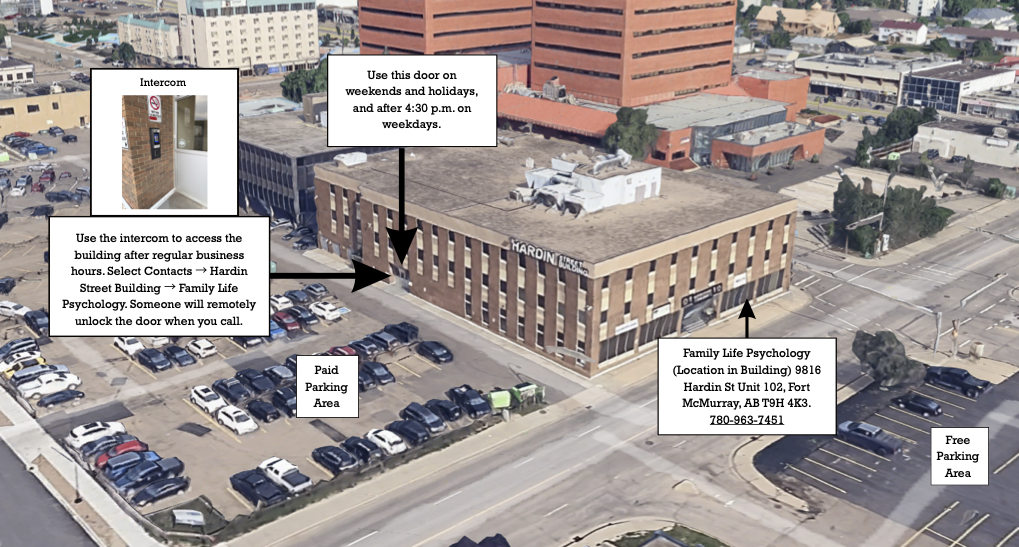
Our Fort McMurray Location
Family Life Psychology & Wellness
9816 Hardin Street, Unit 102
Fort McMurray, AB T9H 4K3